
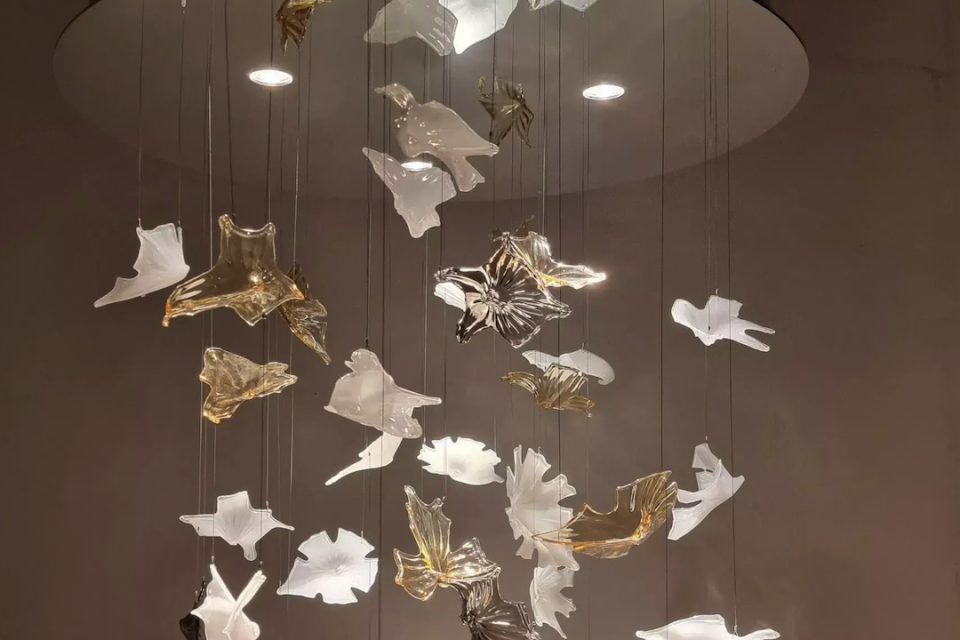
The development of overhead lighting solutions has traversed a complex trajectory, reflecting both technological advancements and evolving aesthetic sensibilities. Early forms, often rudimentary in design, prioritized utility, dispersing light through basic fixtures. The advent of electricity brought incandescent bulbs, leading to more sophisticated designs, but primarily focusing on functional illumination. The 20th century witnessed a diversification, with materials like polished metals, opaque plastics, and even fabrics gaining prominence. This period also saw the rise of modernism, where forms became simpler and functionality often dictated design.
Early Lighting Innovations
Before widespread electrification, oil lamps Casalucelighting and gaslight fixtures served as primary sources of overhead illumination. These devices, while effective for their time, presented challenges related to fuel management, heat output, and safety. Their designs were largely utilitarian, focused on containing the flame and directing a limited amount of light downwards. Materials were often sturdy, like iron or brass, chosen for durability and heat resistance.
Impact of Incandescent Technology
The introduction of the incandescent light bulb by Thomas Edison in the late 19th century revolutionized overhead lighting. This innovation allowed for the creation of fixtures that could house electric light sources, offering greater control over illumination and eliminating the need for combustible fuels. Early electric fixtures often mimicked the styles of their gas-powered predecessors, but gradually, new designs emerged that capitalized on the flexibility offered by electricity. The bulb itself became a central element, sometimes left exposed or encased in simple glass globes.
Post-War Design Shifts
Following World War II, a period of economic recovery and material innovation spurred new trends in overhead lighting. Plastics, such as acrylic and polycarbonate, became increasingly common due to their affordability, moldability, and light-diffusing properties. Mid-century modernism, characterized by clean lines, organic shapes, and a focus on functionality, profoundly influenced lighting design. Pendant lamps and recessed lighting gained popularity, offering varied solutions for different architectural contexts.
The Genesis of Pleated Glass
The application of pleated glass in lighting design represents a specific material and aesthetic development. Its origins can be traced to traditional glassworking techniques, where glass was manipulated to create textural and light-diffusing effects. The pleating process, in this context, involves shaping molten or softened glass into a series of regular folds or ridges. This technique offers a distinct interplay of light and shadow, refracting and scattering light in a way that opaque or uniformly clear glass cannot.
Historical Precedents in Glass Artistry
Glass, throughout its history, has been a medium for both functional objects and artistic expression. Ancient civilizations employed glassblowing and molding techniques to create vessels and decorative items. The Venetian glassmakers, particularly from Murano, elevated glass artistry to an exceptional level, experimenting with color, texture, and form. While direct “pleating” as seen in modern applications may not have been a dominant historical technique, the underlying principles of shaping and texturing glass for aesthetic and optical purposes are deeply rooted in this tradition. Early stained-glass windows, for instance, used leaded divisions to create patterns and control light, albeit through a different mechanism than pleating.
Technical Challenges of Glass Pleating
Creating pleated glass, especially at a scale suitable for overhead lighting, presents specific technical challenges. Glass, by its nature, is brittle and can be difficult to manipulate precisely when molten. Achieving uniform pleats across a large surface requires highly controlled heating and cooling processes, as well as specialized molds or tools. The thickness of the glass, the angle of the pleats, and the consistency of the material all impact the final aesthetic and structural integrity. Imperfections in the pleating process can lead to optical distortions or weaknesses in the glass structure.
Interplay of Light and Form
The defining characteristic of pleated glass overhead lighting lies in its unique interaction with light. The inherent folds and facets of the glass act as a prism, refracting and reflecting light in multiple directions. This diffusion softens the harshness of a direct light source, creating a more ambient and distributed illumination. The visual effect is dynamic, with shadows and highlights shifting as the viewing angle changes, transforming the fixture from a static object into a vibrant interplay of light and form.
Refractive Qualities of Pleated Surfaces
When light encounters a pleated glass surface, it undergoes a series of refractions and reflections. Each fold acts as a small lens, bending the light rays. This process breaks up the direct light source, dispersing it across a wider area and reducing glare. The specific angle and regularity of the pleats determine the degree of diffusion and the pattern of light distribution. Tightly spaced, sharp pleats will produce a more fragmented and shimmering effect, while broader, shallower pleats will result in a softer, more uniform glow. The glass itself, whether clear, frosted, or colored, further influences these optical characteristics.
Sculptural Dimension through Materiality
Beyond its functional role in light diffusion, the pleated glass form contributes a significant sculptural dimension to the lighting fixture. The three-dimensional pattern created by the pleats imbues the object with a tangible presence, even when not illuminated. The interplay of light and shadow on the glass surface highlights its contours and depths, giving it a dynamic quality. When viewed from different angles, the form appears to shift and change, suggesting movement and fluidity despite its static nature. This sculptural attribute allows the fixture to function as a focal point within a space, contributing to its overall aesthetic character.
Architectural Integration
The successful integration of pleated glass overhead lighting into architectural spaces hinges on a careful consideration of scale, proportion, and contextual aesthetics. These fixtures, often commanding in appearance, require spaces that can accommodate their visual weight and unique light-diffusing properties. They are not merely light sources but rather central design elements that can define or enhance the character of a room.
Scale and Proportional Considerations
The physical dimensions of a pleated glass overhead fixture are paramount for its integration within an architectural setting. A fixture that is too large for a small room can overwhelm the space, creating a sense of imbalance. Conversely, a diminutive fixture in a expansive hall may appear insignificant. Proportional harmony is achieved when the size of the fixture relates appropriately to the ceiling height, floor area, and the scale of other architectural features and furnishings. The visual weight of the glass, despite its transparency, also needs to be considered; a heavily pleated design can feel more substantial than a lighter, more open structure.
Aesthetic Harmony and Contrast
The aesthetic integration of pleated glass lighting involves balancing harmony and, at times, strategic contrast. In contemporary minimalist environments, a pleated glass fixture can introduce textural interest and a subtle artistic touch without disrupting the clean lines. In more traditional or eclectic settings, it might serve as a modern counterpoint, juxtaposing its structured form with softer or more ornate elements. The color temperature of the light emitted, as well as the color of the glass itself, also plays a role. Warm-toned light can create an inviting atmosphere, while cooler tones might be preferred for commercial or gallery spaces. The overall goal is to create a cohesive visual narrative where the lighting fixture either seamlessly blends or purposefully stands out as a focal point.
Manufacturing and Craftsmanship
The creation of artistic pleated glass overhead lighting is a testament to specialized manufacturing techniques and the enduring value of craftsmanship. It often involves a combination of industrial processes for consistency and artisanal skill for precision and finishing. The choice of glass, the method of pleating, and the assembly of the final product all contribute to the quality and aesthetic integrity of the fixture.
Advanced Glass Forming Techniques
The production of pleated glass for lighting often relies on advanced glass-forming techniques. This can include hot forming, where sheets of glass are heated to their softening point and then pressed into molds or shaped over forms to create the pleated pattern. Computer-aided design (CAD) and computer numerical control (CNC) machinery can be employed to create highly precise molds and control the heating and cooling cycles, ensuring consistency across multiple pieces. Another method involves slumped glass, where flat sheets are laid over a mold and allowed to sag into the desired shape in a kiln. The specific technique chosen affects the sharpness of the pleats, the uniformity of the pattern, and the overall structural integrity of the glass component.
Artisanal Craftsmanship in Finishing
While industrial processes facilitate the creation of the fundamental pleated forms, artisanal craftsmanship frequently plays a crucial role in the finishing stages. This can involve hand-polishing the glass surfaces to achieve a desired luster or smoothness, carefully inspecting each piece for imperfections, and assembling multiple glass components into the final fixture. Skilled glassblowers or glass artists might also be involved in creating unique, custom pleated designs or integrating other glassworking techniques. The hand of the artisan can introduce subtle variations and a level of refinement that distinguishes a mass-produced item from a carefully crafted piece. This blend of industrial efficiency and human skill contributes to the unique character and perceived value of artistic pleated glass lighting.