
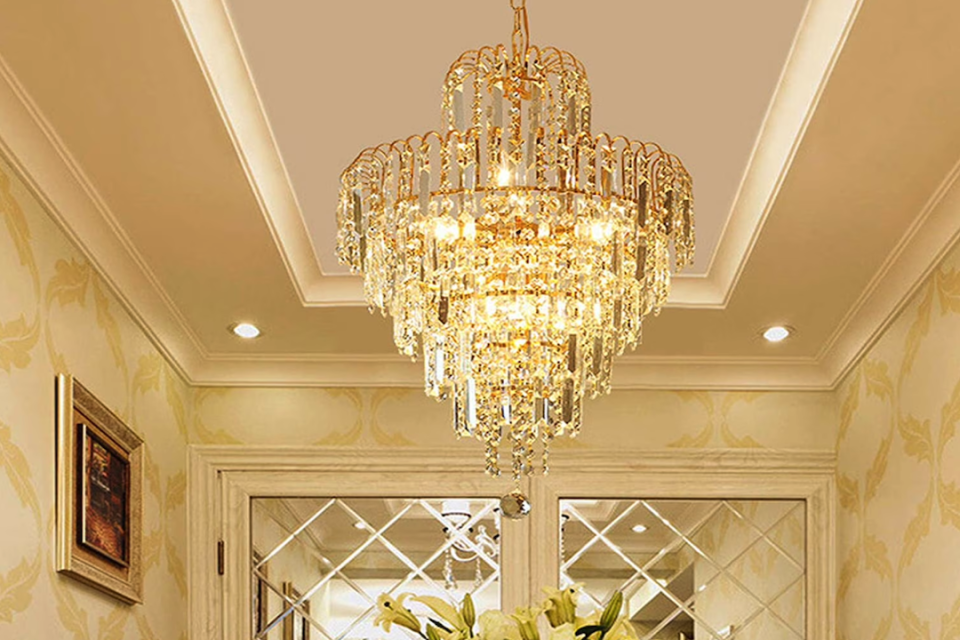
So, you’re wondering how to pick a crystal chandelier for a luxury hotel suite? The short answer is: it’s all about balancing opulent aesthetics with practical considerations like size, lighting function, durability, and the overall design concept of the suite.
The Power of Illumination: More Than Just Light
A chandelier isn’t just a pretty showpiece, especially in a luxury hotel suite. It’s a statement, a mood setter, and a crucial element in creating that unforgettable guest experience. Think beyond mere brightness; consider how the light Mosundesign interacts with the room, the sparkle and refraction it creates, and the overall feeling it evokes.
Setting the Ambiance
In a luxury suite, the chandelier’s primary job is to elevate the ambiance. It should hint at grandeur and sophistication without being overwhelming. You want guests to feel enveloped in luxury, not blinded by excessive sparkle. This means considering the light temperature and dimming capabilities from the outset.
A Focal Point, Not an Obstacle
While it’s a focal point, a chandelier should also integrate seamlessly into the suite’s design. It shouldn’t feel like an afterthought or a piece that simply doesn’t fit. The space and height need to be respectfully considered to ensure it enhances, rather than detracts from, the overall experience.
Deciphering the Design: Style and Material
When it comes to selecting a crystal chandelier, the sheer variety can be dazzling, so let’s break down the key elements: style and material. These two aspects fundamentally shape the chandelier’s presence and its ability to complement a luxury suite.
Navigating Chandelier Styles
The “elegant” in “elegant crystal chandelier” can manifest in many ways. You’re not just picking a light fixture; you’re choosing a piece of art that reflects the suite’s personality.
Traditional Grandeur
Think classic designs with intricate detailing, multiple tiers, and often a more ornate frame. These are often inspired by historical periods like Baroque, Rococo, or Empire styles. For a suite aiming for timeless elegance and a sense of heritage, a traditional chandelier can be incredibly effective. Imagine a suite with plush velvet furniture, dark wood accents, and a traditional crystal chandelier serving as the crowning jewel. The crystals, often full leaded, refract light in a classic, sparkling manner, adding depth and richness.
Modern Sophistication
Modern chandeliers embrace cleaner lines, geometric shapes, and a less cluttered aesthetic. They might feature fewer, larger crystals, or use them in more abstract configurations. For a contemporary luxury suite with minimalist design principles, a modern crystal chandelier can provide that touch of sparkle without feeling out of place. Consider a suite with sleek leather furniture, polished chrome, and large windows – a modern chandelier would complement these elements beautifully, offering subtle brilliance.
Transitional Harmony
Often a blend of traditional and modern, transitional chandeliers offer flexibility. They might have a classic shape but with simplified details, or modern elements incorporated into a more conventional structure. This style is excellent for suites that want to feel current yet timeless, avoiding either extreme. It’s a safe bet for a suite that might evolve its decor over time, as a transitional piece tends to adapt well.
Understanding Crystal Types
The type of crystal used significantly impacts the chandelier’s brilliance, weight, and price. It’s not just about “sparkle”; it’s about the quality and composition of that sparkle.
Full Lead Crystal (e.g., Swarovski, Asfour)
Considered the gold standard, full lead crystal contains a high percentage of lead oxide (typically 30% or more). This high lead content increases the crystal’s refractive index, meaning it bends light more effectively and creates those intense, kaleidoscopic rainbows. Swarovski and Asfour are well-known manufacturers, famed for their precision cuts and consistent quality. A chandelier made with full lead crystal will have a substantial weight and a distinct, brilliant sparkle. It’s the ultimate choice for a truly luxurious experience where every detail matters. The way light hits these crystals during the day, even without the bulbs on, can transform a room with a dance of rainbows.
K9 Crystal
Also known as optical crystal, K9 is a high-quality lead-free glass. It still offers good clarity and light refraction, though typically not to the same degree as full lead crystal. It’s a more budget-friendly option that can still look very impressive. For suites where the budget is a consideration but quality is still paramount, K9 can be an excellent compromise. It’s less dense than full lead crystal, making chandeliers potentially lighter, which can sometimes simplify installation. While it may not throw the same intensity of rainbows as full lead, it still provides a beautiful, clean sparkle.
Hand-Blown Glass
While not strictly “crystal” in the leaded sense, hand-blown glass often appears in chandeliers designed for luxury spaces, sometimes alongside actual crystal elements. It offers a unique, organic, and artisanal quality. Each piece is unique, adding character and a bespoke feel. This can be fantastic for suites aiming for a more artistic or crafted aesthetic, moving away from purely symmetrical sparkle towards something more textural and individual.
Sizing Up the Sparkle: Proportions and Placement
This is where practicality meets panache. An elegant chandelier can quickly become an eyesore if it’s either too small and gets lost, or too large and dominates the space uncomfortably. Getting the proportions right is crucial for that luxurious feel.
The Golden Rules of Chandelier Sizing
There are a few widely accepted guidelines that serve as an excellent starting point.
Diameter and Room Dimensions
A common rule of thumb for chandelier diameter is to add the length and width of the room in feet, and that sum in inches gives you a good approximate diameter for your chandelier. For example, a 15′ x 20′ room would ideally suit a chandelier around 35 inches in diameter. This isn’t a hard and fast rule, but it helps ensure the fixture feels proportionate. In a hotel suite, where the space is often segmented (living area, sleeping area), you might be sizing for a specific zone rather than the entire suite.
Height and Ceiling Clearance
This is paramount for safety and aesthetics. You want guests to be able to comfortably walk underneath the chandelier. A general guideline is to allow at least 7 feet of clearance from the bottom of the chandelier to the floor. In a high-ceilinged suite, you can afford a taller chandelier. For example, in a suite with a 10-foot ceiling, a 3-foot tall chandelier would still leave plenty of clearance. Conversely, a suite with standard 8-foot ceilings would require a much shorter fixture, perhaps a flush mount or semi-flush mount crystal light. Consider the placement of any furniture directly underneath; you don’t want the chandelier to obstruct views or feel overwhelming when seated.
Strategic Placement Within the Suite
Where you hang the chandelier is almost as important as the chandelier itself.
Centerpiece in the Living Area
This is a classic placement. A stunning crystal chandelier positioned centrally in the suite’s main living area immediately establishes a sense of grandeur. It becomes the room’s gravitational pull, drawing the eye upwards and setting the tone for the entire suite. Here, you’d apply the sizing rules based on the living area’s footprint.
Above the Dining Nook
If the suite includes a separate dining area, a smaller, more intimate crystal chandelier can define this space. It creates a warm, inviting glow perfect for meals, adding a touch of sophistication to the dining experience. Ensure it’s hung high enough not to be an obstruction or cause glare for guests seated at the table – typically 30-36 inches above the tabletop is a good starting point, adjusting for ceiling height.
Subtle Sparkle in the Bedroom
While often avoided in primary sleeping areas for practical reasons (e.g., lying in bed and seeing a bright light), a crystal chandelier can work beautifully in a large luxury suite bedroom, particularly if it’s placed strategically. Perhaps over a seating area within the bedroom, or offset from the bed, where it provides ambient light without being directly overhead. In these cases, dimming capabilities are absolutely essential to maintain a truly relaxing atmosphere.
The Technical Details: Illumination and Installation
Beyond the visual appeal, a chandelier is still a light fixture, and its practical aspects are critical for a hotel environment. Safety, ease of maintenance, and functionality can’t be overlooked.
Lighting Technology and Control
A luxury fixture needs luxury lighting.
Dimmable LED Bulbs
This is practically non-negotiable for a hotel suite. LED bulbs offer energy efficiency, a long lifespan (reducing maintenance costs and disruptions), and produce very little heat. The dimmable aspect is crucial for allowing guests to tailor the ambiance to their preference, from bright and functional to soft and romantic. Ensure the LED bulbs chosen have a good Color Rendering Index (CRI) – ideally 90+ – to accurately represent colors in the room.
Warm vs. Cool Light Temperature
The “color” of the light, measured in Kelvin (K), significantly impacts the mood. For luxury suites, a “warm white” light (typically 2700K to 3000K) is almost always preferred. It creates a cozy, inviting, and sophisticated atmosphere, complementing the warm tones often found in luxury decor. Cool white (4000K+) can feel sterile and harsh, more suited for offices or task lighting.
Smart Lighting Systems
In a high-end luxury hotel, integrating the chandelier into a smart lighting system allows guests to control various light sources in the suite seamlessly, often from a single wall panel or even a tablet. This adds a layer of convenience and technological sophistication that discerning guests appreciate. It also allows for pre-programmed lighting scenes (e.g., “Relax,” “Bright,” “Welcome”) further enhancing the guest experience.
Installation and Maintenance Considerations
A chandelier is an investment and needs to be treated as such, especially in a commercial setting.
Structural Support
Crystal chandeliers can be very heavy, especially larger ones made with full lead crystal. It is absolutely imperative that the ceiling structure can safely support the weight. This often means reinforcing the ceiling joists or installing specialized support brackets. This isn’t a DIY job; professional expertise from an electrician and/or structural engineer is essential during the planning phase. Overlooking this can lead to catastrophic consequences.
Accessibility for Cleaning and Bulb Replacement
In a hotel, chandeliers need to be kept pristine. Dust accumulation on crystals dulls their sparkle. Plan for how the chandelier will be regularly cleaned and how bulbs will be replaced. For very large or high-mounted fixtures, this might involve motorized lifts, scaffolding, or extendable poles. Easy access minimizes maintenance time and disruption to guest stays. Consider the design of the chandelier – some have fewer, larger crystals that are easier to wipe down than hundreds of tiny, intricate ones.
Safety Regulations and Electrical Codes
All electrical installations in a hotel must adhere to strict local and national electrical codes and safety regulations. This includes proper wiring, grounding, and fuse protection. Working with certified electricians familiar with commercial installations is non-negotiable to ensure guest safety and avoid potential liabilities.
Harmonizing with the Suite’s Narrative: Theme and Integration
A luxury hotel suite often tells a story or embodies a specific aesthetic. The chandelier needs to be a seamless, eloquent part of that narrative, not a disruptive outlier. It needs to feel like it belongs.
Defining the Suite’s Aesthetic
Before even looking at chandeliers, you need a clear understanding of the suite’s overall design theme.
Contemporary Chic
If the suite embraces minimalist lines, perhaps with muted color palettes, large windows, and a focus on texture over ornamentation, the chandelier should reflect this. Think clean forms, possibly with fewer, larger crystals or even a more abstract crystal arrangement. A geometric, elongated design might work better than a cascading, traditional one.
Classic Opulence
For suites that lean into traditional luxury – perhaps with rich fabrics, antique reproductions, and intricate details – a more ornate, multi-tiered crystal chandelier would be a natural fit. Here, the sparkle should feel abundant and classical, enhancing the sense of historical grandeur.
Art Deco Glamour
If the suite features elements of Art Deco (geometric patterns, metallic accents like brass or chrome, rich jewel tones), a chandelier with a strong linear design, possibly incorporating black crystal or smoked glass accents, would be stunning. It should feel bold and sophisticated, echoing the era’s distinctive aesthetic.
Beyond the Chandelier: Complementary Lighting
The chandelier, as striking as it is, should rarely be the only light source in a luxury suite.
Layering for Depth
Effective lighting design relies on layering. This means incorporating various types of lighting to create depth and flexibility.
- Recessed Downlights: These provide general ambient lighting and can be dimmed to create a soft wash of light. Use them strategically to illuminate pathways or highlight architectural features.
- Table and Floor Lamps: These offer task lighting (for reading) and localized ambient light, creating intimate zones within the suite. Think beautifully crafted lamps with appropriate shade materials that complement the chandelier.
- Wall Sconces: These can add decorative accents and provide a mid-level wash of light, especially useful in hallways or framing artwork. They can reinforce the aesthetic established by the chandelier.
- Art Lighting: Small, focused lights to highlight artwork or decorative elements, adding another layer of visual interest.
Consistency in Finish and Tone
While the chandelier might be the star, its metal finish (e.g., polished chrome, antique brass, brushed nickel) should ideally harmonize with other metal accents in the room, such as door handles, lamp bases, or furniture hardware. This creates a cohesive and polished look that speaks to meticulous design. The crystal quality and style should also feel consistent with the overall level of luxury and aesthetic complexity of the suite. You wouldn’t put a simple, minimalist crystal light in a highly ornate, antique-filled suite, and vice versa. It’s all about creating a unified, intentional design statement.